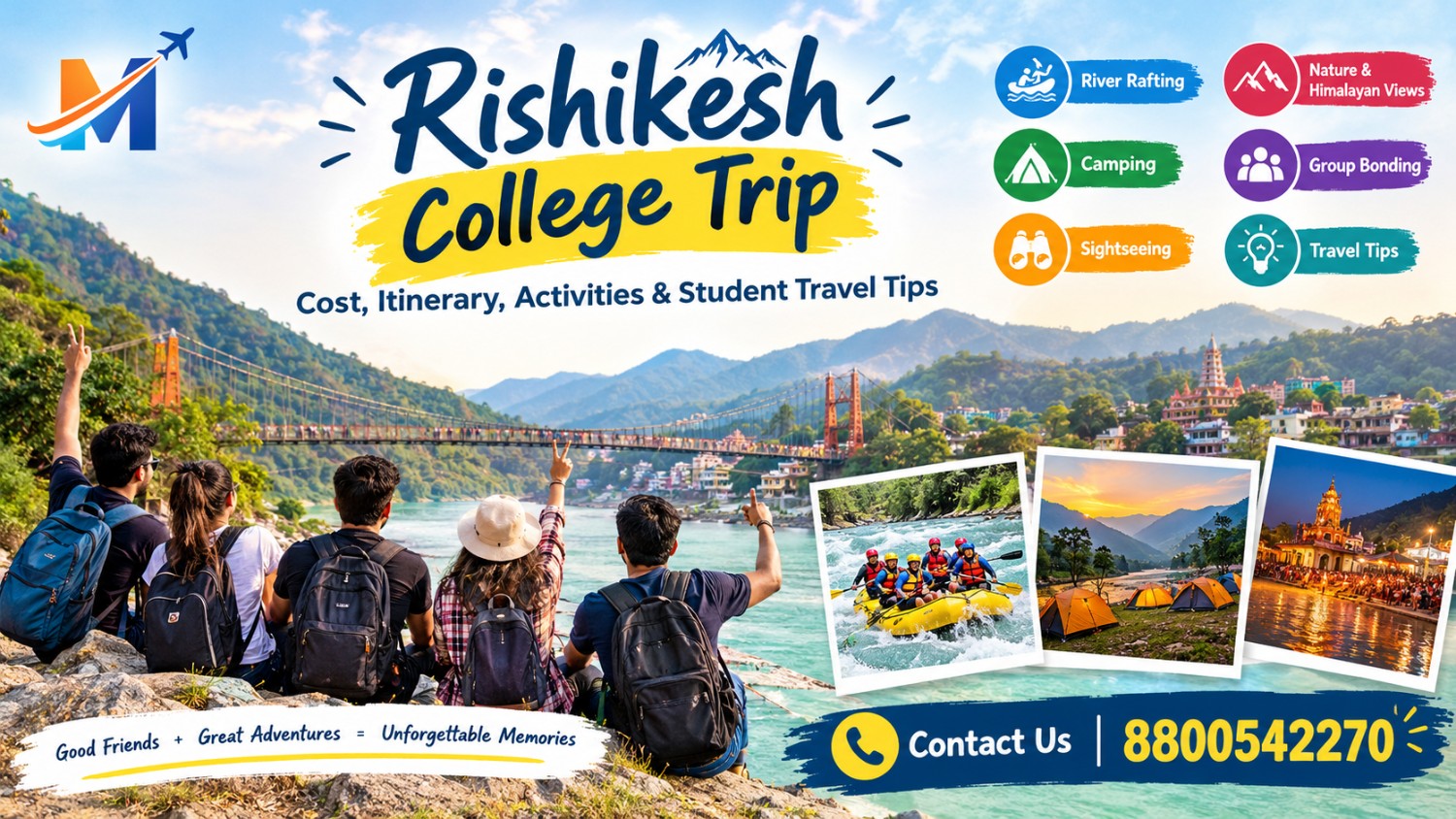
Plan a Rishikesh college trip with a practical itinerary, student budget, river rafting, camping, sightseeing, transport options, and group travel tips.
A Rishikesh college trip offers a refreshing combination of adventure, nature, cultural experiences, and time away from campus. Located in Uttarakhand, Rishikesh is popular among student groups for its river rafting, riverside camps, suspension bridges, yoga centres, and access to the Himalayan foothills. It can work equally well for a short college outing, a department excursion, a student society trip, or a longer educational journey.
The key to planning a successful Rishikesh college trip is balancing adventure with practical arrangements. Students need a realistic budget, reliable transportation, suitable accommodation, clear group rules, and enough free time to enjoy the destination without rushing between activities.
This guide covers the best time to visit, places to explore, a sample three-day itinerary, estimated costs, transportation options, and safety considerations to help students and college coordinators organise a memorable trip.
Rishikesh is a practical choice for college group travel because it offers different experiences within a relatively compact destination. Students can combine outdoor activities with sightseeing, spiritual landmarks, local food, and opportunities to learn about the region's culture and environment.
Here is what makes it suitable for student groups:
For student organisers, the biggest advantage is flexibility. The itinerary can be adjusted for a small group of friends, a college society, or a larger batch travelling together.
The best time depends on the activities your group wants to enjoy, the weather, and the operating schedules of adventure providers.
Spring is a popular period for sightseeing and outdoor adventures. Days are generally comfortable for walking around the town, visiting riverfront areas, and exploring nearby attractions. Rafting availability depends on current operating permissions, river conditions, and provider schedules.
Summer holidays can be convenient for college groups, particularly when students have a break between semesters. However, daytime temperatures can be high, and popular accommodation may fill quickly.
Book transport and group stays in advance, carry water, and schedule outdoor sightseeing during cooler hours.
Monsoon brings greener surroundings but also increases the possibility of heavy rain, slippery paths, swollen rivers, and road disruptions. River rafting and other water activities may be suspended depending on conditions and official instructions.
For a college group, this period requires extra flexibility. Do not build the trip around rafting unless the activity is confirmed for your dates.
Post-monsoon conditions often make this a comfortable period for exploring the town, visiting temples, walking around the main market areas, and enjoying the surrounding scenery. Check the weather forecast and availability before confirming adventure activities.
Planning tip: If rafting is a priority, confirm the operating season and river conditions with an authorised local operator before paying for a non-refundable group booking.
Rishikesh is accessible from Delhi and other major North Indian cities by road and rail connections. The best option depends on the number of students, departure point, and available budget.
Rishikesh is approximately 240–250 km from Delhi by road, depending on the starting point and route. The journey commonly takes around 5–7 hours in favourable traffic, but congestion, breaks, and road conditions can extend it.
College groups can consider:
For a large batch, a dedicated vehicle can simplify luggage handling, meeting points, and coordination. Confirm the vehicle's passenger capacity, luggage space, driver arrangements, and permitted travel hours before booking.
Haridwar is a useful railway gateway for Rishikesh. Students can travel by train to Haridwar and arrange onward transport by taxi, bus, or another suitable local service.
Train travel can be economical for larger groups, but tickets should be booked early, particularly during holidays and weekends. Allow enough time for the onward transfer rather than scheduling activities immediately after the train arrives.
Jolly Grant Airport near Dehradun is the nearest major airport commonly used by visitors to Rishikesh. Air travel may be practical for groups travelling from distant cities, although onward road transport adds to the overall cost.
For most Delhi-based college groups, road or rail travel is generally more economical.
A good student itinerary combines well-known landmarks with a few relaxed experiences instead of attempting to cover every attraction in one day.
The Lakshman Jhula area is associated with Rishikesh's riverfront scenery, temples, cafés, and pedestrian exploration. Access to individual bridges and nearby routes can change, so check current local arrangements before visiting. Students should avoid overcrowding narrow walkways and follow posted restrictions.
Ram Jhula connects important areas around the Ganga and offers views of the river, surrounding hills, and religious landmarks. It is a convenient stop for group photographs and a walk through nearby shops and ashram areas. Keep the group together and avoid blocking pedestrian movement.
Triveni Ghat is a significant riverside bathing and worship site. The evening Ganga Aarti offers students a chance to observe local religious traditions and understand the cultural importance of the river. Visitors should dress respectfully, follow the organisers' instructions, and avoid treating the ceremony as simply a photo opportunity.
Also known as Chaurasi Kutia, this former ashram is known for its meditation structures, forest setting, and distinctive artwork. It can be an interesting stop for students interested in music, history, architecture, or meditation culture. Verify current entry arrangements and fees before the visit.
Neer Garh Waterfall is an option for students who want a short nature outing. The walk involves uneven and potentially slippery sections, especially after rain. Wear shoes with good grip, allow sufficient time, and avoid climbing on wet rocks or entering unsafe water.
Camping can make a student trip feel different from a regular sightseeing holiday. Depending on the location and package, camps may offer meals, group activities, and designated outdoor spaces. Choose a legally operated campsite away from unsafe riverbanks, and confirm what is actually included before booking.
For a more activity-focused itinerary, students can compare a Rishikesh rafting and adventure activity package with a sightseeing-based plan. The appropriate option depends on your dates, group size, and the activities currently available.
The most enjoyable student trips usually include a mix of planned activities and unstructured time. Choose activities based on the group's interests rather than trying to fit everything into one day.
River rafting is one of Rishikesh's best-known adventure experiences. It can be exciting for college groups, but it requires proper supervision and attention to safety.
Before booking, confirm:
Students should follow the guide's instructions and never enter the river independently. Anyone who is uncomfortable with water activities can choose sightseeing or another suitable experience.
An organised campsite can provide space for team-building activities, group discussions, board games, or a simple evening gathering. Some camps offer meals and scheduled activities, but facilities vary significantly.
Ask about bedding, washrooms, hot water, meal timings, electricity, and the distance from the main road. Do not assume a campsite is directly beside the Ganga simply because it is advertised as riverside camping.
Rishikesh has a strong association with yoga and meditation. A beginner-friendly session can add an educational and relaxing element to the trip, particularly for students interested in wellness or Indian traditions.
Contact the venue beforehand to confirm group capacity, timings, fees, and any participation requirements.
The café areas around Tapovan and other visitor hubs offer places to relax after sightseeing. Students can try local snacks, North Indian meals, and café-style food while exploring the town.
For larger groups, call ahead before arriving at a small café. Splitting into smaller groups for meals can be more practical than expecting every restaurant to seat an entire college batch at once.
Attending an evening Ganga Aarti can add a cultural dimension to the trip. Students can also visit suitable ashram areas and learn about Rishikesh's spiritual traditions.
Keep this part of the itinerary respectful and unhurried. Religious sites are places of worship, so follow local customs and any restrictions on photography or visitor access.
Three days and two nights is a practical duration for a student group travelling from Delhi. It allows time for travel, sightseeing, an adventure activity, and some relaxation without making the schedule unnecessarily demanding.
Arrival, check-in and local sightseeing
Adventure activities and group time
Nature, breakfast and return journey
Important: This is a sample itinerary, not a fixed schedule. Rafting, waterfall visits, and other outdoor activities should be arranged around current conditions. If your group has an early train or a fixed reporting time at college, leave enough room for delays and avoid adding distant attractions on the final day.
A reasonable planning estimate for a two-night, three-day trip from Delhi is approximately ₹3,500–₹7,000 per student for a budget-conscious group, excluding unusually expensive transport choices and personal shopping. The actual amount depends on group size, accommodation, meals, activities, and travel dates.
Use the following estimates as an initial budgeting guide, not as live quotations.
These figures are indicative and may not fit every group. The total can be lower or higher depending on the transport arrangement, seasonal rates, meal inclusions, activity choices, and the number of paying participants.
For a large batch, obtain quotations for the actual headcount. A rate quoted for 20 students may not apply to 40 or 50 students because the vehicle, room allocation, and activity arrangements may need to change.
The right accommodation depends on the trip's purpose, budget, and transport arrangements.
Tapovan is a useful area to consider for student groups interested in cafés, yoga centres, and adventure-related services. Check the distance from the accommodation to the rafting operator or activity meeting point instead of assuming everything is within walking distance.
Staying closer to established town areas can suit groups prioritising markets, local transport, and access to certain cultural attractions. Traffic and pedestrian movement can vary, so confirm parking and vehicle access if travelling by bus.
Campsites may suit groups looking for an outdoor experience. Check the property's location, permitted activities, safety arrangements, washrooms, meal plan, and transport access.
For a college trip, the lowest advertised price should not be the only deciding factor. Confirm the property's current reviews, booking terms, room capacity, emergency access, and cancellation policy before making payment.
Planning becomes more complicated as the number of students increases. Assigning responsibilities before departure can prevent delays and misunderstandings.
Divide responsibilities among a few volunteers:
Keep a shared itinerary with the accommodation address, driver contact, meeting points, and booking confirmations. Collect only the personal information genuinely required for trip coordination, and share it responsibly.
A college group can choose a self-organised trip or arrange a coordinated package. A self-organised trip gives students more flexibility, but the group must manage transport, hotel bookings, activity reservations, and unexpected changes separately.
A coordinated arrangement can simplify logistics, particularly for larger batches. Minto Holidays can be approached to discuss a group itinerary with suitable transport, accommodation, sightseeing, and activities based on the group's requirements. Confirm the final inclusions and pricing in writing before booking.
Students looking for an outdoor-focused experience can also review this Rishikesh camping tour package. Groups interested in combining Rishikesh with Haridwar can explore the Haridwar and Rishikesh tour package. For a wider regional itinerary, the Uttarakhand tour package from Delhi is another option to consider. Check the actual itinerary and inclusions carefully, as package features and availability may vary.
A little preparation can make a significant difference to the trip.
A compact packing list for a two-night college trip includes:
Avoid carrying valuables or unnecessary luggage during outdoor activities. Follow the operator's instructions for storing phones, wallets, and other personal items.
Rishikesh combines busy visitor areas, religious sites, outdoor trails, and a river environment that can change rapidly. Student groups should treat safety as part of the itinerary rather than as an afterthought.
For adventure activities: Book through a reputable operator, check the safety briefing, wear the provided equipment correctly, and follow the guide's instructions. Do not participate if you feel unwell or are uncomfortable with the activity.
During the monsoon: Heavy rainfall can affect river levels, trails, and road conditions. Follow local advisories and accept cancellations when conditions are unsafe.
At riverbanks and waterfalls: Avoid entering the water outside authorised areas, jumping from rocks, or taking photographs close to slippery edges. Never assume shallow-looking water is safe.
For group movement: Use a buddy system, agree on meeting points, and conduct attendance checks before leaving each attraction. Make sure the trip leader knows how to contact local emergency services.
For responsible travel: Carry waste back to designated bins, avoid single-use plastics where practical, respect residents and religious communities, and do not disturb wildlife or damage natural surroundings.
If the trip includes trekking or other physically demanding activities, check the difficulty level and participation requirements in advance. Consider appropriate travel insurance, particularly if the itinerary includes adventure activities.
A realistic schedule, transparent budget, and clear communication are more valuable than squeezing in as many attractions as possible.
Two days can work for a short outing focused on sightseeing or one main activity. However, three days and two nights are generally more comfortable for groups travelling from Delhi because they allow time for transport, accommodation check-in, adventure activities, and local exploration without rushing.
A basic two-night, three-day trip from Delhi may cost approximately ₹3,500–₹7,000 per student, depending on shared transport, accommodation, meals, and activities. This is a planning estimate rather than a confirmed package price. Request current quotations based on your actual group size and dates.
Yes, it can be suitable, provided transport, accommodation, and activities are booked according to the confirmed headcount. Larger groups should appoint student coordinators, arrange clear room allocations, confirm vehicle capacity, and check whether the activity provider can safely accommodate everyone in the available time slots.
No. Rafting availability depends on the operating season, river conditions, weather, and applicable local restrictions. Heavy rainfall or unsafe river conditions may lead to suspensions. Confirm availability with an authorised operator shortly before departure, and do not treat rafting as guaranteed when booking a trip.
Yes. Students can explore the cultural importance of the Ganga, visit religious landmarks, learn about yoga and meditation traditions, and observe local tourism practices. Colleges can add value by organising a short reflection session or assignment on local culture, river conservation, or responsible tourism.
Tapovan can suit groups interested in cafés and adventure-related services, while central town areas may be convenient for certain sightseeing and transport needs. Organised campsites are another option for outdoor-focused trips. Compare location, room capacity, washrooms, transport access, and safety arrangements before booking.
March, April, October, and November are worth considering for a mix of sightseeing and outdoor experiences, although actual conditions vary. May and June can also suit students travelling during summer holidays. If rafting is essential, verify its current operating schedule rather than relying on the month alone.
Camping can be suitable when the property is properly operated and has appropriate safety arrangements, facilities, and access. Check its exact location, emergency access, washrooms, supervision, and river proximity. Avoid unsafe riverbanks, especially during the monsoon, and follow the campsite's rules.
Yes. A three-day itinerary can combine selected attractions in both destinations, depending on the departure point and activity schedule. Haridwar's religious landmarks and evening Ganga Aarti complement Rishikesh's adventure and outdoor experiences. Avoid scheduling too many activities on the same day, and confirm transfer times before booking.
Confirm the final group size, travel dates, vehicle capacity, accommodation arrangements, meals, activity inclusions, cancellation policy, emergency contacts, and payment terms. For adventure activities, also check eligibility requirements, safety equipment, and weather-related cancellation procedures. Keep the final itinerary and booking confirmations accessible to the trip leader.
A well-organised Rishikesh college trip can give students a welcome break from campus while creating opportunities for adventure, cultural learning, and group bonding. The best itineraries balance exciting activities with practical transport arrangements, suitable accommodation, realistic costs, and enough flexibility to handle changing conditions.
Start by deciding your travel dates, group size, and budget. Then shortlist accommodation, confirm activity availability, and finalise transport before collecting payments from students.
If your college group needs help coordinating accommodation, transfers, sightseeing, or outdoor experiences, contact Minto Holidays to discuss a suitable group travel plan. A clear itinerary and confirmed inclusions can help students and coordinators prepare with greater confidence.