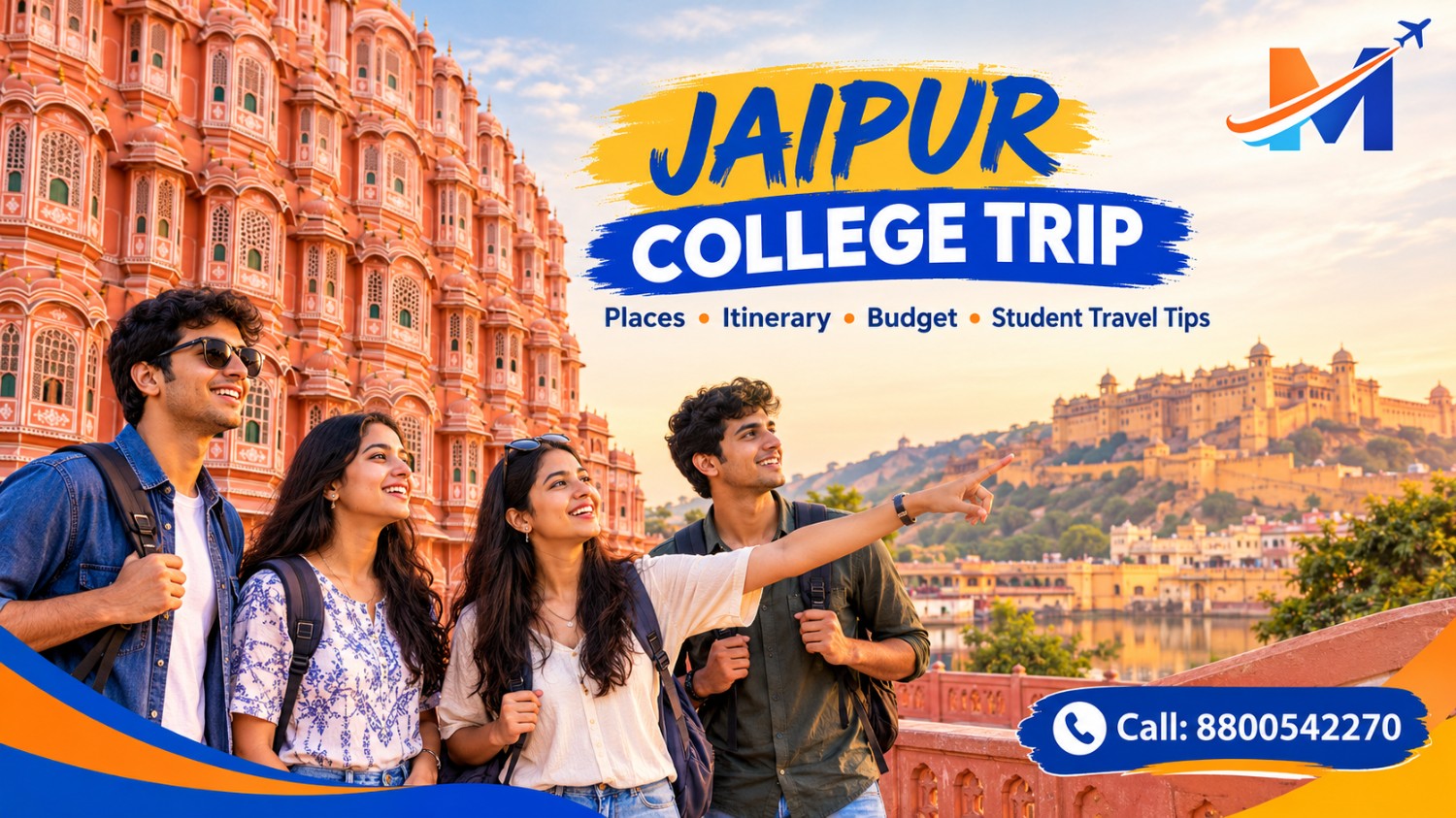
Plan a Jaipur college trip with popular attractions, a 2–3 day itinerary, student budgets, transport options, local food and practical group travel tips.
A Jaipur college trip can combine history, architecture, local food, photography, cultural experiences and time with friends without requiring an expensive travel budget. Rajasthan's capital is particularly suitable for student groups because its major attractions can be explored over two or three days, with opportunities to learn about Rajput history, traditional crafts and the city's living heritage.
The key to a successful college trip to Jaipur is balancing sightseeing with enough free time for students to enjoy the city. Instead of squeezing every attraction into one day, plan the route geographically, decide on group transport in advance and keep a realistic allowance for meals, entry tickets and unexpected expenses.
This guide covers the best places to visit, a practical Jaipur group itinerary, estimated student costs, transport options, accommodation advice and safety tips to help college representatives, student coordinators and faculty members organize a smoother trip.
Jaipur works well for educational excursions, student societies, photography clubs, architecture students and groups simply looking for a memorable break from campus.
Here is what makes the city worth considering:
For colleges travelling from Delhi NCR, Jaipur is also a practical option for a short trip by train, bus or road. The most suitable option depends on the group size, departure time, available budget and the college's reporting schedule.
The most comfortable period for a Jaipur student group is generally October to March, when daytime sightseeing is usually more pleasant than during the peak summer months.
This period can be suitable for outdoor sightseeing, heritage walks and photography. Festival dates may bring additional cultural activities, but accommodation demand and prices can increase around major events.
Winter is a popular season for college excursions. Mornings and evenings can be chilly, so students should carry a light or medium jacket, especially if the itinerary includes an early departure to Amber Fort.
Book transport and accommodation early when travelling during holidays or major festivals.
Jaipur becomes increasingly hot, particularly in April, May and June. If a college trip must take place during this period, schedule outdoor attractions early in the morning, keep midday activities flexible and provide sufficient drinking water and rest breaks.
Monsoon can bring some relief from the heat, but rain and humidity may affect outdoor sightseeing. Check weather forecasts before departure and avoid assuming that every outdoor activity will run as planned.
Planning tip: For a large student group, choose dates first, then check accommodation availability, transport costs and attraction timings before collecting final payments.
A good itinerary combines major heritage sites with a few relaxed activities rather than treating every attraction as a quick photo stop.
Amber Fort is one of the most rewarding stops for students interested in Rajput architecture, courtyards, gateways and historic defensive structures. Allow around two to three hours for a comfortable visit, depending on crowds and the areas you explore. Wear comfortable shoes because the complex involves walking and some uneven surfaces.
The famous Palace of Winds is a useful stop for understanding Jaipur's architectural identity. Its distinctive façade makes it ideal for photography, while its windows and design offer an opportunity to discuss historical architecture. Combine it with nearby attractions rather than planning a separate long journey.
This historic astronomical observatory is particularly valuable for college groups studying science, mathematics, history or engineering. Its large instruments demonstrate how celestial observations and timekeeping were approached before modern electronic technology. Consider a guided visit if the college wants to make the excursion more educational.
City Palace offers insight into Jaipur's royal history, decorative arts and courtly traditions. Students interested in design, textiles, heritage conservation or history may find this stop especially useful. Check current ticket categories and photography rules before visiting.
Jal Mahal is a scenic palace set in Man Sagar Lake and works well as a shorter photography stop. Plan time for the lakeside viewpoint rather than assuming you can enter the palace; access arrangements can vary, and it is generally viewed from the shore.
This museum is a worthwhile addition for groups interested in art, decorative objects, historical collections and architecture. It can also provide a more structured indoor activity when the weather is uncomfortable. Check opening hours and any weekly closure before finalizing the route.
Bapu Bazaar is a good place to explore textiles, traditional footwear, souvenirs and everyday market life. Set a meeting point and return time before students begin shopping. Bargaining is common in many market stalls, but prices and quality vary, so compare products before buying.
For a first college visit, six or seven carefully chosen stops are usually more manageable than trying to cover every attraction in Jaipur.
Three days is a comfortable duration for a Jaipur college trip, particularly when students are travelling from Delhi NCR or nearby cities. It gives the group enough time for heritage sightseeing, cultural experiences, shopping and relaxed meals.
Morning
Afternoon
Evening
Keep Day 1 flexible if the group arrives after an overnight journey. Starting with a packed sightseeing schedule immediately after a long bus or train ride can leave students exhausted.
Morning
Afternoon
Evening
Allow additional time for traffic and queues. Amber Fort and Nahargarh Fort are not stops to squeeze into a schedule with no flexibility.
Morning
Afternoon
If your group has a late departure, you can consider an additional museum or a relaxed cultural activity. Avoid scheduling a distant attraction immediately before a train or bus departure.
Alternative for a two-day trip: Cover the City Palace area, Hawa Mahal, Jantar Mantar, Amber Fort and Jal Mahal. Skip the extra fort and shopping stops if the arrival and departure timings leave limited sightseeing hours.
Jaipur is connected to major Indian cities by rail, road and air. The right choice for a student group depends on its departure point, size and available budget.
Delhi to Jaipur is approximately 280–300 km by road, depending on the starting point and route. A road journey commonly takes around five to six hours in favourable conditions, but traffic, stops and road conditions can extend it.
For a large Jaipur student group, compare the total cost of a private vehicle against individual tickets. Include tolls, parking, driver allowance and local transport when calculating road travel costs.
Jaipur International Airport connects the city with selected domestic and international destinations, with routes and frequencies varying by season and airline. Rail and road connections may be more convenient from some cities.
Check current schedules directly with the relevant airline, railway or bus operator before confirming the itinerary.
A two- or three-day Jaipur trip can be planned at different budget levels. The estimates below are indicative planning ranges per student, not live quotations. They assume a domestic trip, shared accommodation and ordinary sightseeing, with the final cost depending on departure city, group size, travel dates and inclusions.
These ranges should not be treated as guaranteed package prices. For students travelling from distant cities, intercity transport alone can increase the budget substantially.
The main cost components are:
For a college organizer, the most useful figure is the complete per-student cost, including transport from the departure city and back. A low hotel price is not much help if the group later needs expensive local transfers.
The best accommodation area depends on the itinerary, transport arrangements and whether the college prioritizes convenience, affordability or a more relaxed environment.
Staying near central attractions can reduce travel time to Hawa Mahal, City Palace and nearby markets. However, some streets are busy or narrow, so a large coach may not be able to stop directly outside the property.
These areas can be practical bases for student groups seeking access to city transport, restaurants and major roads. Compare actual travel times to your planned attractions rather than relying only on the hotel's advertised distance from the city centre.
Properties farther from the main sightseeing areas may offer suitable group arrangements, but savings should be weighed against daily transport costs and journey time.
Before booking, confirm:
For college trips, one well-organized property with a clear room-allocation plan is often easier to manage than splitting students across multiple hotels.
Jaipur's food scene is a useful part of the trip, not just a break between attractions. Students can sample regional flavours while keeping meals affordable.
Popular options include:
For a large group, pre-arranging lunch or dinner at a restaurant that can accommodate everyone may save time. Check menu prices and dietary options in advance, and do not assume every student will prefer spicy food.
Students can also explore traditional textiles, jewellery, pottery and block-printing traditions. If the college wants a stronger educational component, arrange a suitable craft demonstration or workshop in advance rather than assuming walk-in availability.
A well-planned Jaipur college tour needs more coordination than a family holiday because the organizer is responsible for a group with different needs and spending limits.
If the trip is part of a formal college excursion, follow the institution's approval process and its requirements for faculty supervision, permissions and student safety.
Organizing transport, rooms, sightseeing and student payments separately can become difficult when a college group includes 20, 30, 50 or more participants. A planned itinerary can make coordination easier by bringing the main arrangements together.
Minto Holidays can be approached for travel planning assistance covering transport, accommodation and sightseeing requirements, subject to the final itinerary and confirmed inclusions.
Colleges can explore the Jaipur tour package from Delhi as a starting point for discussing a suitable trip. Groups interested in extending the journey can also consider a Jaipur, Agra and Mathura–Vrindavan tour, depending on available time and the group's educational objectives.
For colleges looking to explore more of Rajasthan, a Rajasthan tour package from Delhi may help with planning a longer trip. An alternative for groups interested in regional heritage and architecture is the Rajasthan heritage tour.
Before confirming any arrangement, ask for a written quotation that specifies group capacity, room sharing, transport type, meals, sightseeing inclusions, applicable entry fees and cancellation conditions. The final itinerary should be based on the college's departure city, dates, group size and budget.
Two days are sufficient for a short visit covering major attractions such as Hawa Mahal, City Palace, Jantar Mantar and Amber Fort. Three days are preferable if the group also wants to explore Nahargarh Fort, museums, local markets and cultural experiences without rushing between stops.
For a two- or three-day trip, a preliminary budget of ₹3,000–₹9,000 per student may work for some groups using economical or mid-range arrangements. The total depends on departure city, transport, hotel category, meals and entry tickets. Obtain current quotations before fixing the student contribution.
Yes, particularly for colleges based in Jaipur or nearby areas. However, a one-day excursion should focus on a few attractions rather than the entire city. Select nearby locations, plan transport carefully and allow time for meals and rest.
Amber Fort, Jantar Mantar, City Palace and Albert Hall Museum are useful choices. They provide opportunities to explore architecture, astronomy, history, art and cultural heritage. Colleges can improve the learning experience by arranging a suitable guide or preparing subject-related questions for students.
October to March is generally suitable for outdoor sightseeing because temperatures are often more comfortable than in peak summer. December and January can have chilly mornings and evenings, while holiday periods and festivals may increase accommodation demand.
Yes, provided the group has suitable transport, confirmed accommodation and a clear itinerary. Large groups should be divided into smaller teams for attendance and coordination. Confirm that restaurants, hotels and any guided activities can accommodate the full group before arrival.
Students can compare public transport, app-based cabs, auto-rickshaws and pre-arranged vehicles. For a large group visiting several attractions in one day, a suitable hired vehicle may simplify coordination. Compare the complete cost, including parking and waiting charges, rather than only the initial fare.
Carry comfortable walking shoes, weather-appropriate clothing, a reusable water bottle, sunscreen, a cap, personal medicines and a power bank. Winter travellers should pack warm layers. Keep a photo ID and essential contact details accessible, and follow the college's instructions regarding luggage and valuables.
Yes. A longer itinerary can combine Jaipur with Agra, and potentially Mathura or Vrindavan, depending on the available days. The group should account for road travel, monument visiting time and accommodation changes. For a relaxed trip, allow additional days instead of adding several destinations to a tight schedule.
Confirm the total cost per student, transport capacity, room allocation, meals, sightseeing schedule, ticket inclusions, emergency arrangements, cancellation policy and payment deadlines. Also check whether the proposed itinerary works with the college's approval requirements and students' return schedules.
A successful Jaipur college trip is about more than ticking off famous monuments. The best experience combines meaningful sightseeing, local culture, shared meals and enough flexibility for students to enjoy the journey together.
Start by fixing the dates, group size and budget. Then choose the attractions that matter most, arrange reliable transport and confirm accommodation before collecting the final contribution from students.
If your college needs help coordinating the main travel arrangements, contact Minto Holidays to discuss a Jaipur group itinerary based on your departure city, student count and budget. A clear plan helps faculty members coordinate the trip and gives students more time to enjoy the experience.